Build on This
A search planning platform teams can work from
Your search planning product, with a name that gives every team a shared point of reference.
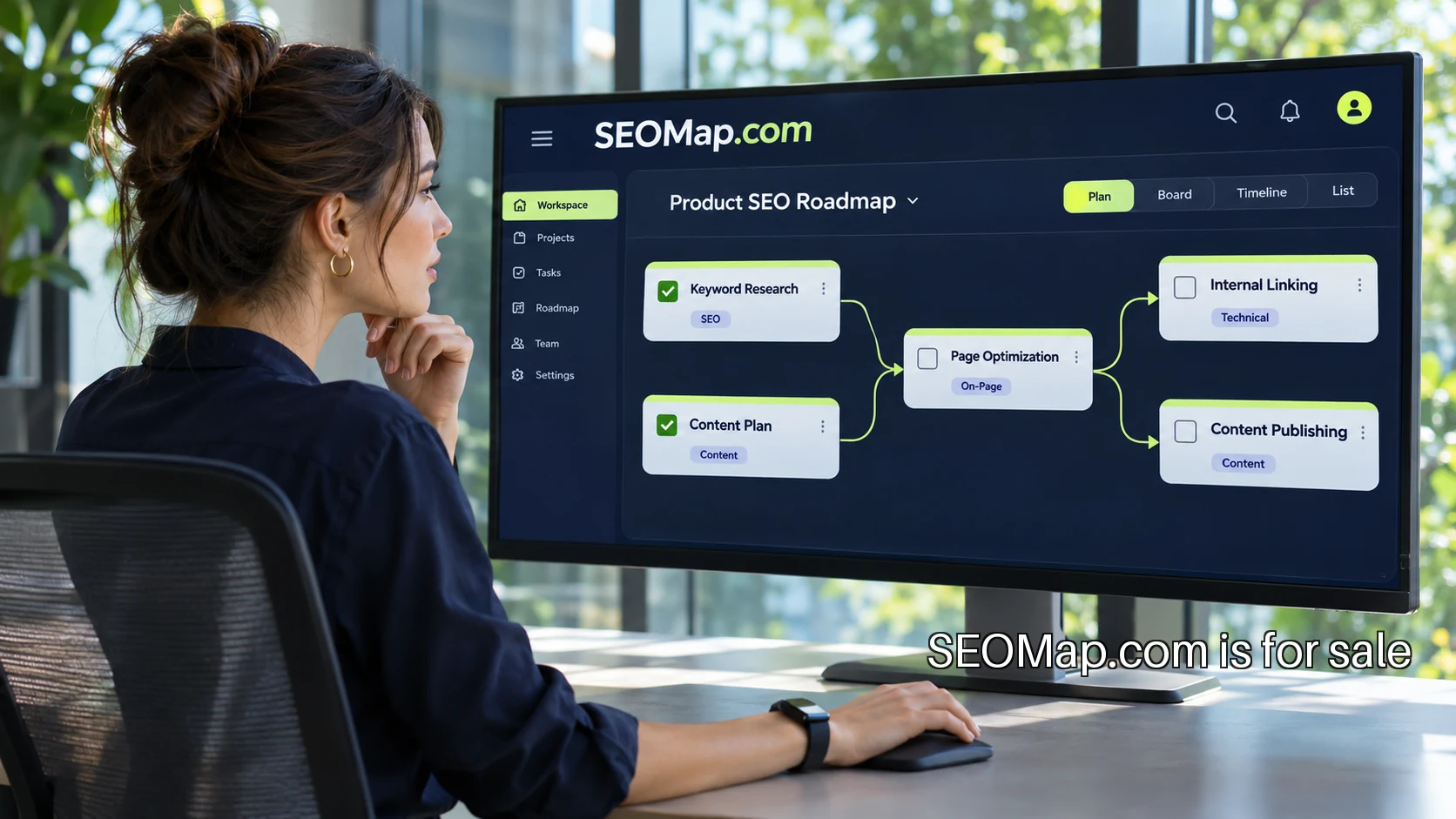
A planning product has a useful opening when a team already has plenty of findings but cannot agree on the next piece of work. The founder's job is to help that team turn a collection of observations into a sequence people can own. Under SEOMap, the first product could be a shared workspace for those decisions, with every task connected to a reason, a responsible person and an observable finish.
Start at the planning meeting
Choose one buyer before choosing integrations. A useful first buyer is an in-house search lead who works with a product manager and a small engineering team. Their recurring task is to prepare a release queue. The search lead has evidence, the product manager has competing requests and engineering needs enough detail to estimate work. The product should help all three leave the meeting with the same plan.
Interview that group about a recent task that stalled. Ask for the actual handoff, the unanswered question and the point at which the request stopped moving. Record whether the difficulty was missing evidence, unclear scope, ownership or a dependency. Those are different problems. A dashboard that puts them in the same status column will hide the work the team needs to do.
Make one decision object useful
The central record could be a decision card. Give it a specific observation, affected page group, evidence date, proposed change, owner and validation method. Keep the evidence separate from the recommendation. A search specialist should be able to update a recommendation without rewriting the original observation, and an engineer should be able to see exactly what changed since the last review.
For example, a team may find that a navigation change left an important category difficult to reach. The card should identify the affected template, show the relevant internal links and describe the proposed change in terms a developer can implement. It should also say which checks will establish completion. A screenshot of a chart is weaker than a small reproducible example with a clear expected state.
Plan around dependencies
The useful planning detail is the relationship between tasks. A template repair might have to land before a content editor revises dozens of pages. A migration might require decisions about canonical addresses before redirects are written. Show those links explicitly. Let the product distinguish a task that is ready to schedule from one waiting for a policy decision or missing access.
Begin with a small set of states: investigate, ready for decision, scheduled, verifying and complete. Each state needs an exit condition. Investigating ends when the evidence can support a recommendation. Verifying ends when the agreed checks have been run. Avoid making a universal scoring formula the centerpiece of the first version; teams need to see why a task is ready before they need a number attached to it.
Sell a completed planning cycle
The first commercial offer could cover one site, one planning cycle and a bounded group of collaborators. That creates a concrete unit of value: the team can prepare, agree and review a workable queue. Pricing research should test whether the buyer funds collaboration software, specialist analysis or operational reporting. The category determines the budget owner and the procurement questions the founder needs to answer.
Distribution can begin with practitioners who already facilitate these meetings. Offer a guided pilot in which they bring their existing findings and finish with an owned queue. Observe where they leave the tool for a spreadsheet or a message thread. That is useful product evidence. Ask whether the final plan was used at the next meeting and whether the assigned people could act without another explanation.
Keep the evidence understandable
Search systems have their own terminology. The product can preserve that terminology in evidence while translating the decision into the team's own workflow. Google's SEO Starter Guide offers a reference point for fundamental search concepts. Link a specific claim to the relevant guidance instead of placing a general documentation link beneath every task.
A useful integration with Search Console would keep query and page context attached to the observation. Google's Search Console introduction explains the tool's role in understanding crawling, indexing and search performance. A planning product can bring that evidence into a decision record while retaining the source and the date it was inspected.
Test the smallest complete version
Build one end-to-end cycle before expanding the data connectors. Import a limited set of findings, let the team revise them together, assign the next three tasks and review the outcome. Track which decisions needed clarification and which records were actually reused. A successful pilot gives the founder a better product specification than a long feature wishlist.
SEOMap suits that direction because the founder can show the route from an observation to an owned decision. The first release can stay narrow: one planning cycle, one team and a queue they can explain. From there, the product can earn its place in the wider stack by making the next planning conversation easier to complete.